


 中文简体
中文简体 Español
 日本語
日本語 0
0
How to Use a Cooling Towel?
Content
- 1 Step-By-Step: Activating A Cooling Towel Correctly
- 2 Why A Damp Towel Feels Cold: The Science Behind It
- 3 Cooling Towel Styles Built For Different Activities
- 4 Cooling Towel Compared With Other Towel Types
- 5 Care Tips That Keep The Cooling Effect Working
- 6 Mistakes That Reduce Cooling Performance
- 7 Frequently Asked Questions
To use a cooling towel, soak it in cool water for about thirty seconds, wring out the excess, and give it one sharp snap in the air. The fabric drops in temperature almost immediately and stays cool for roughly twenty to forty minutes before it needs to be wetted again.
- 1Soak the towel fully in water
- 2Wring out the excess moisture
- 3Snap it once to activate cooling
- 4Drape it on the neck, wrists, or forehead
Step-By-Step: Activating A Cooling Towel Correctly
A cooling towel only performs well when it is activated the right way. Most cooling towels sold for sports and outdoor work are made from a nylon and water-soluble polyester blend, often around 155gsm, which is engineered to hold water in its fibers rather than let it drip straight through. The activation process below applies to nearly every fabric-based cooling towel, whether it is a solid color style or a printed sports towel.
- Wet the towel completely. Submerge it in a bowl, sink, or bottle of cool water for twenty to thirty seconds so the fibers absorb as much moisture as they can hold.
- Wring firmly. Twist the towel to remove the excess water. It should feel damp, not dripping, since a towel that is too wet cools less efficiently and feels heavy on the skin.
- Snap it once or twice. A quick snapping motion opens the weave and triggers the instant cooling sensation that most users notice within a few seconds.
- Place it on a pulse point. Wrap it around the neck, lay it across the shoulders, or press it against the wrists and forehead, since these areas cool the rest of the body fastest.
- Re-wet as it warms. Once the towel feels dry to the touch, repeat the soak-and-snap process. In hot, dry conditions this may be needed every twenty minutes; in humid conditions it can last closer to forty.
Why A Damp Towel Feels Cold: The Science Behind It
The chilling sensation is not refrigeration, it is evaporative cooling. The fibers in a cooling towel are hydrophilic, meaning they attract and hold water rather than repel it. As that trapped water evaporates from the fabric surface, it pulls heat away from the skin underneath, the same mechanism the body uses when it sweats, only concentrated and amplified across a larger surface area.
| Condition | Typical Cooling Duration | Re-Wetting Frequency |
| Hot and dry (low humidity) | 15 to 20 minutes | Every 15 to 20 minutes |
| Warm and humid | 30 to 40 minutes | Every 30 to 40 minutes |
| Indoor gym or air-conditioned space | 40 to 60 minutes | Every 40 to 60 minutes |
Because the cooling effect depends on evaporation rather than stored cold, a cooling towel will always work faster in dry air and more slowly in humid air. This is worth remembering for anyone comparing it to a frozen gel pack, which cools through stored temperature instead of moisture loss.
Cooling Towel Styles Built For Different Activities
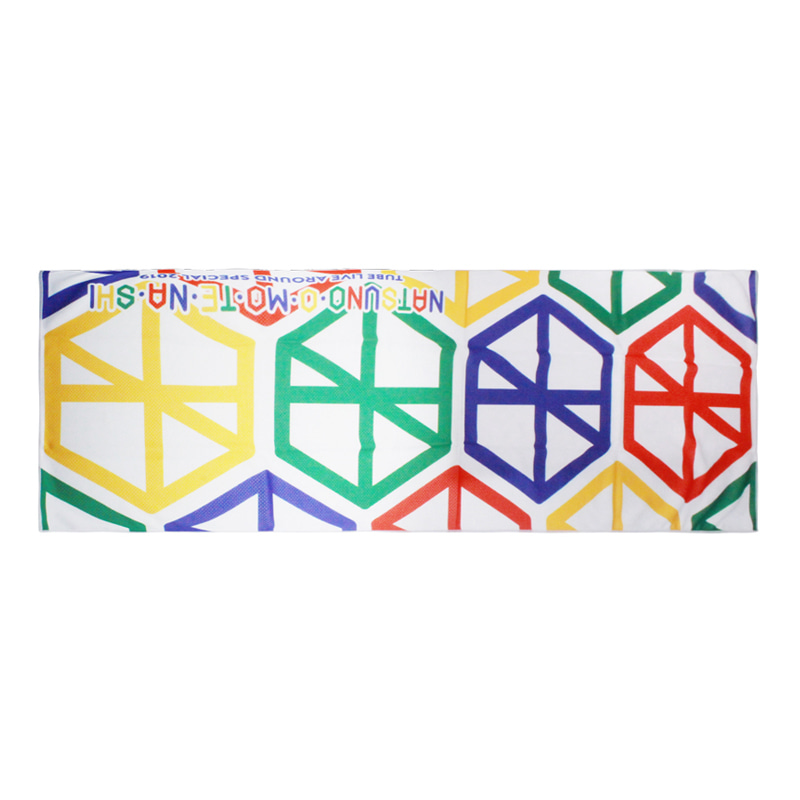
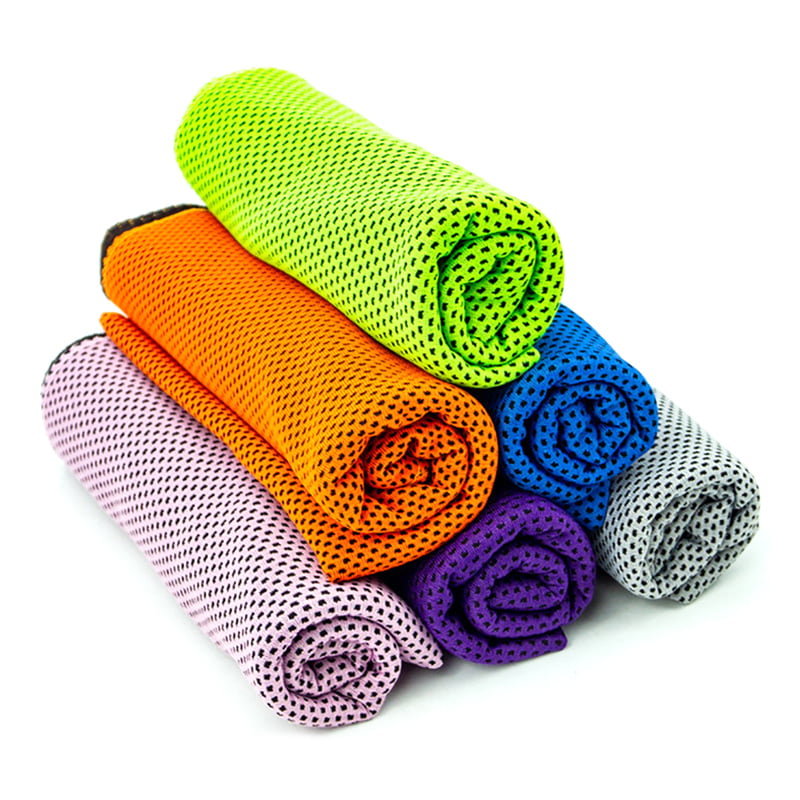
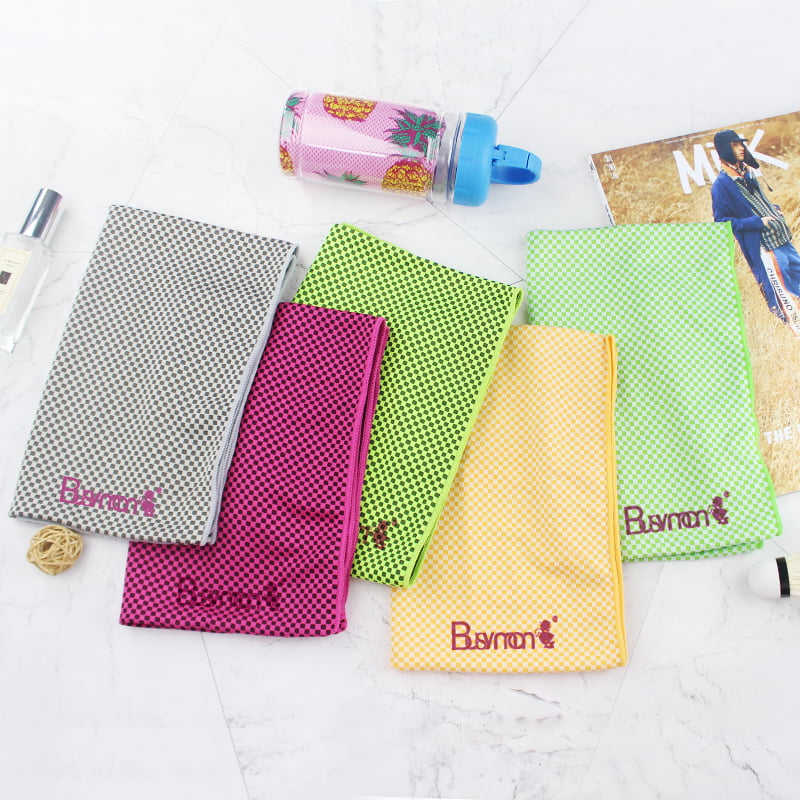
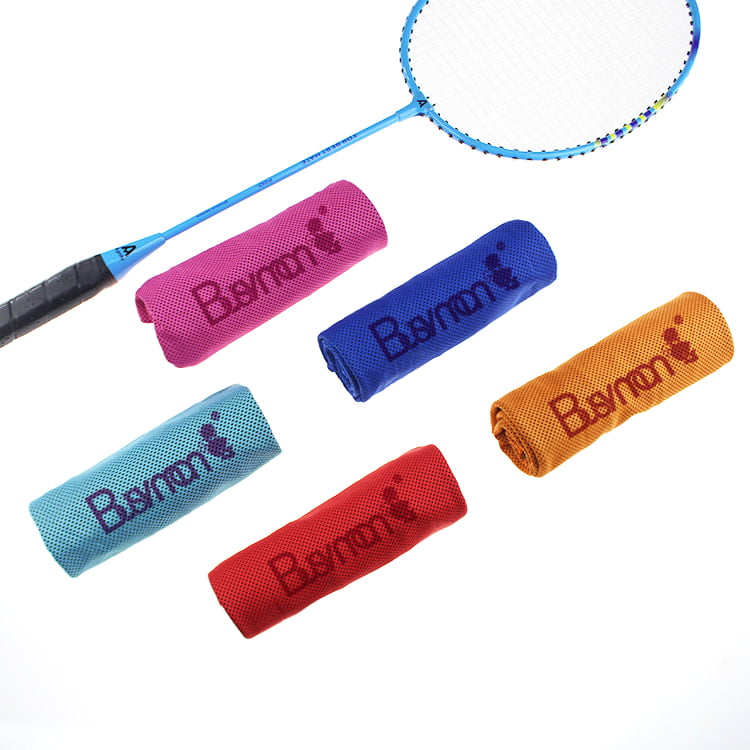
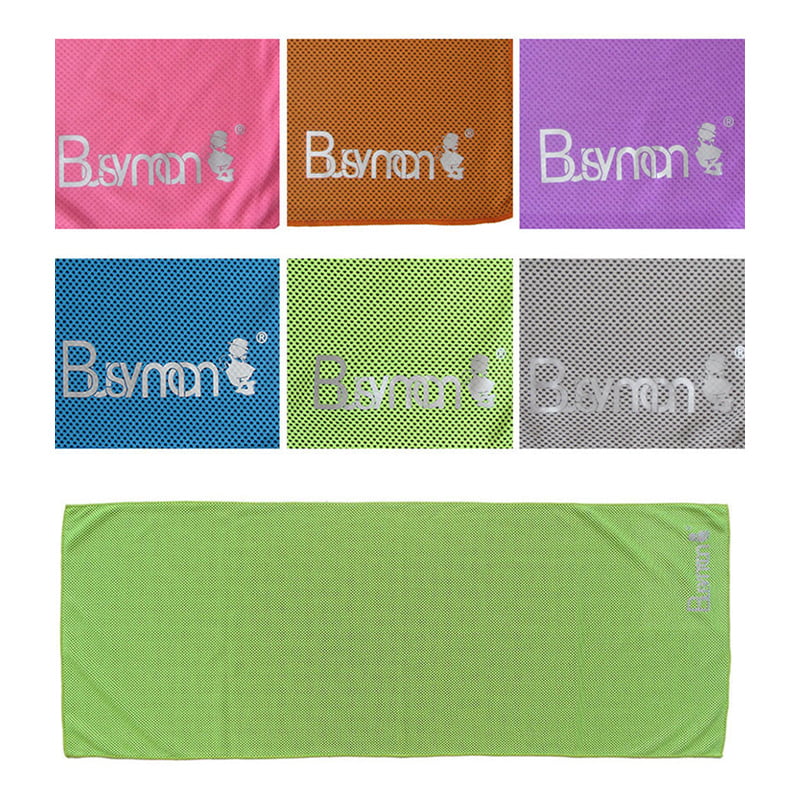
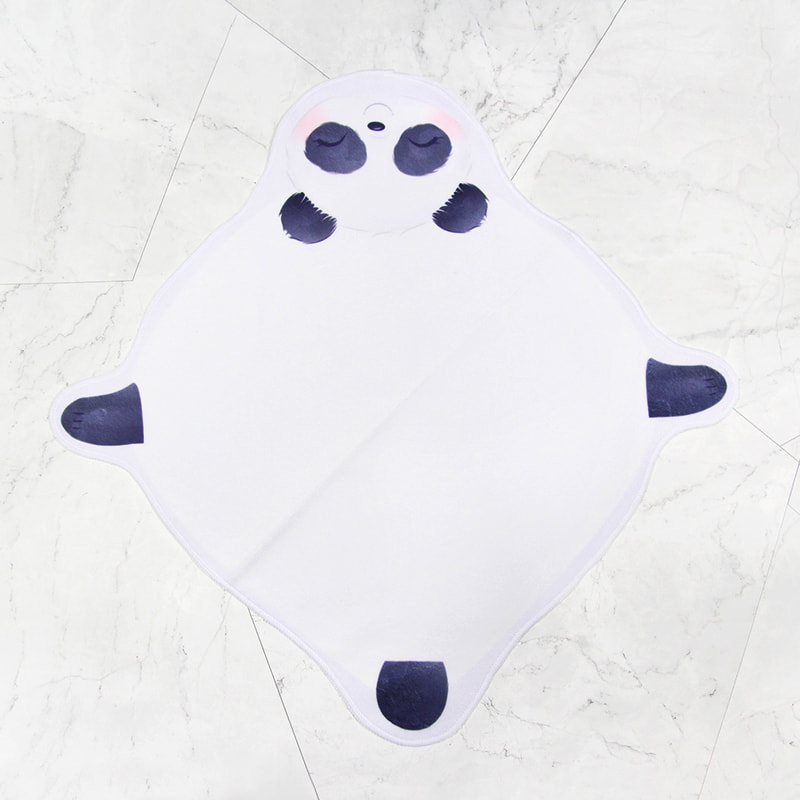
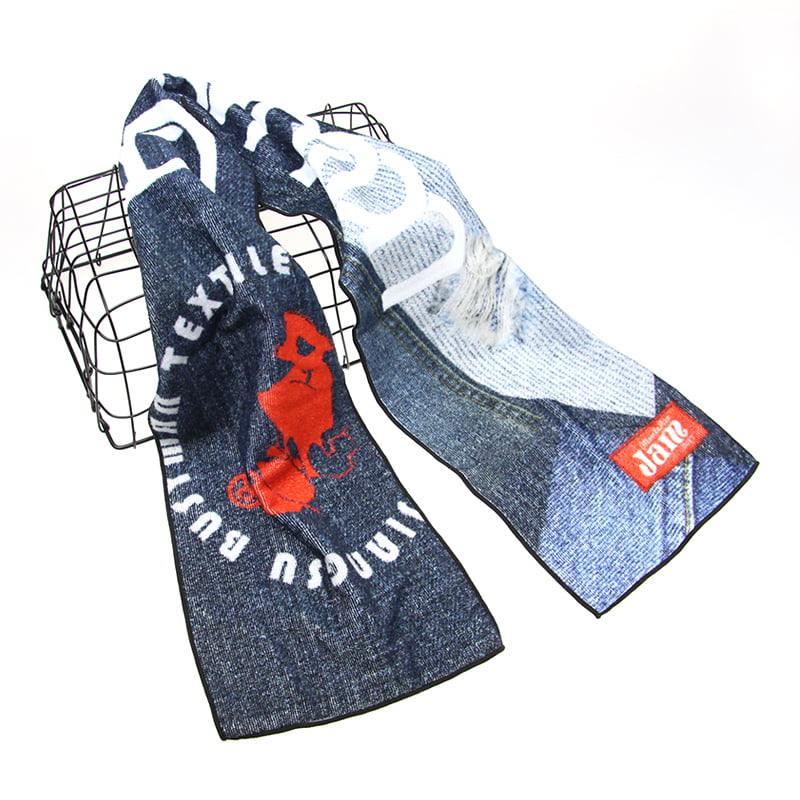
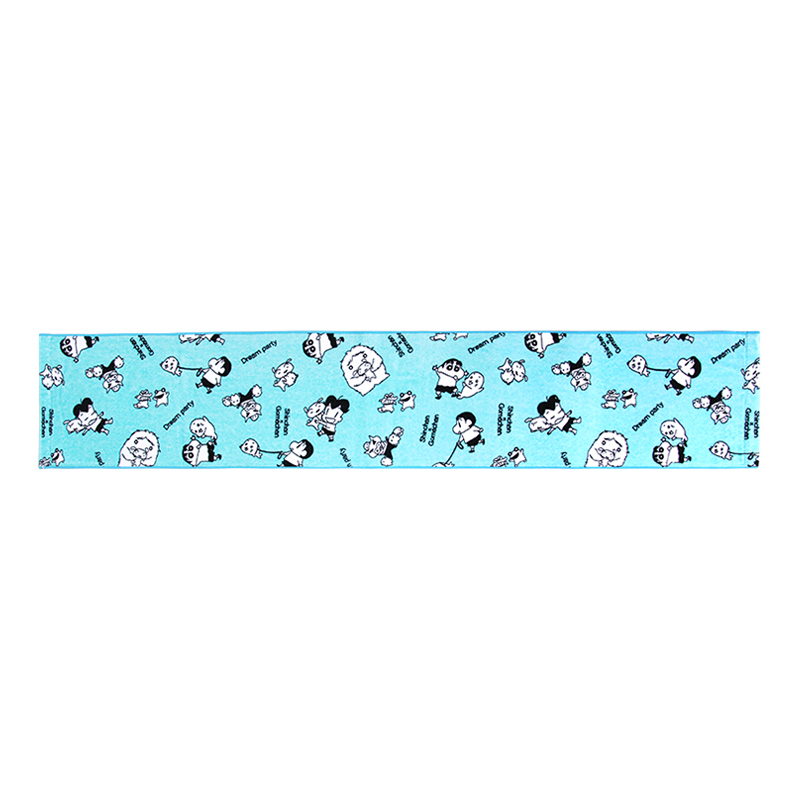
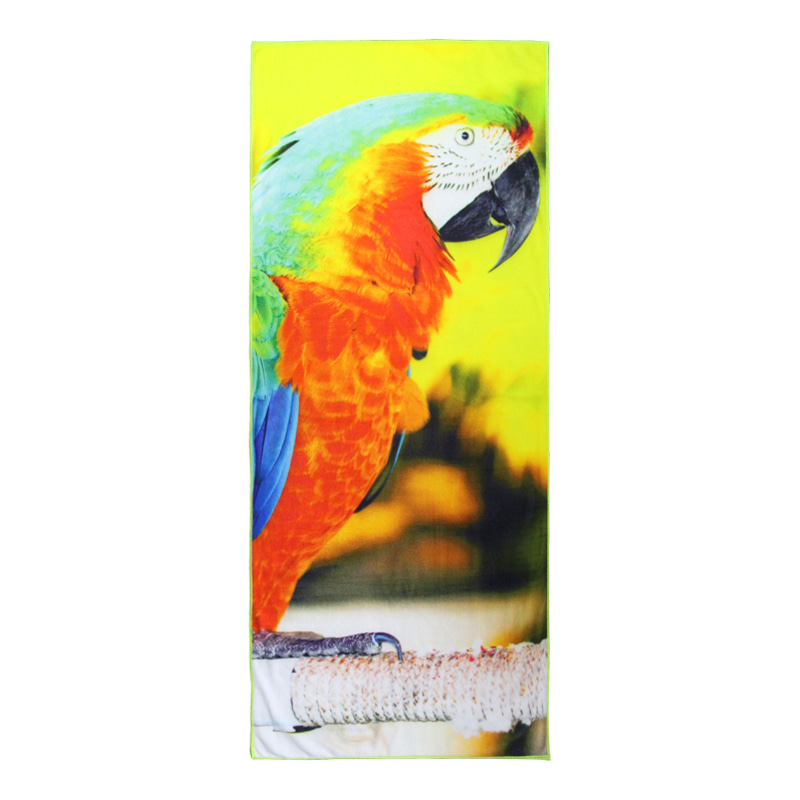
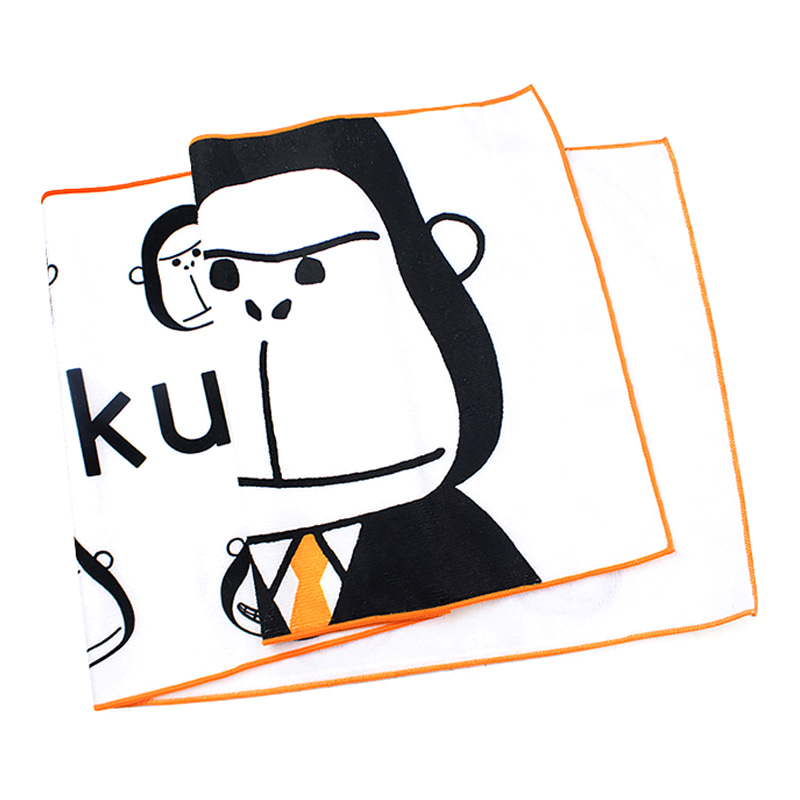
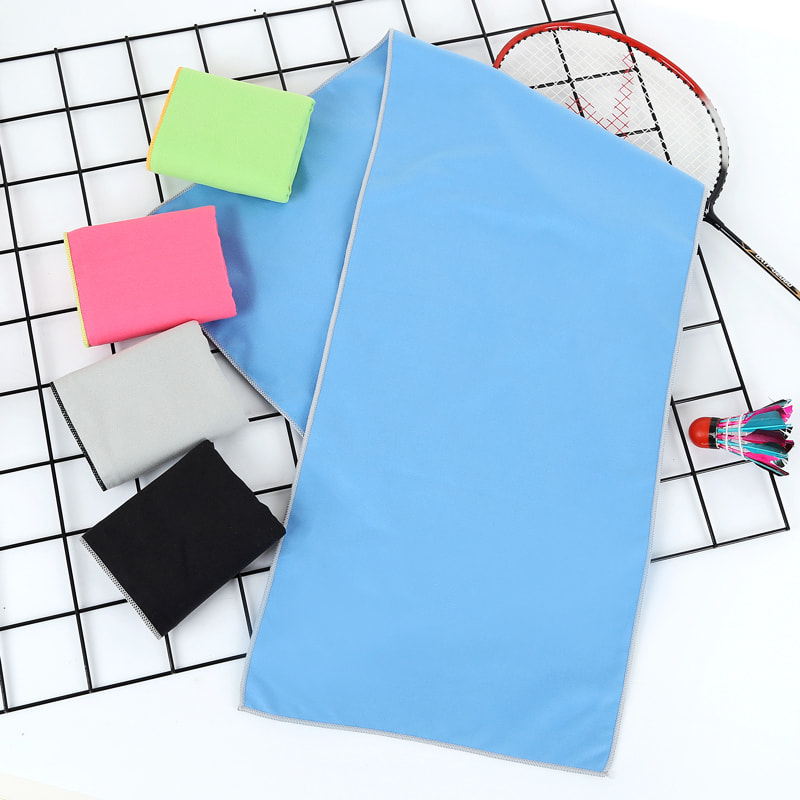
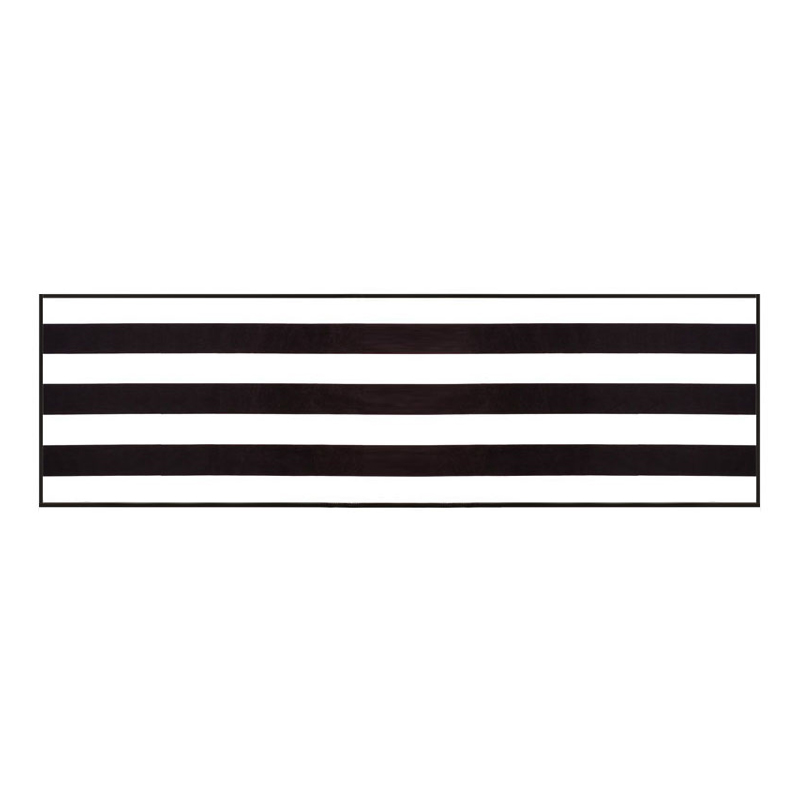
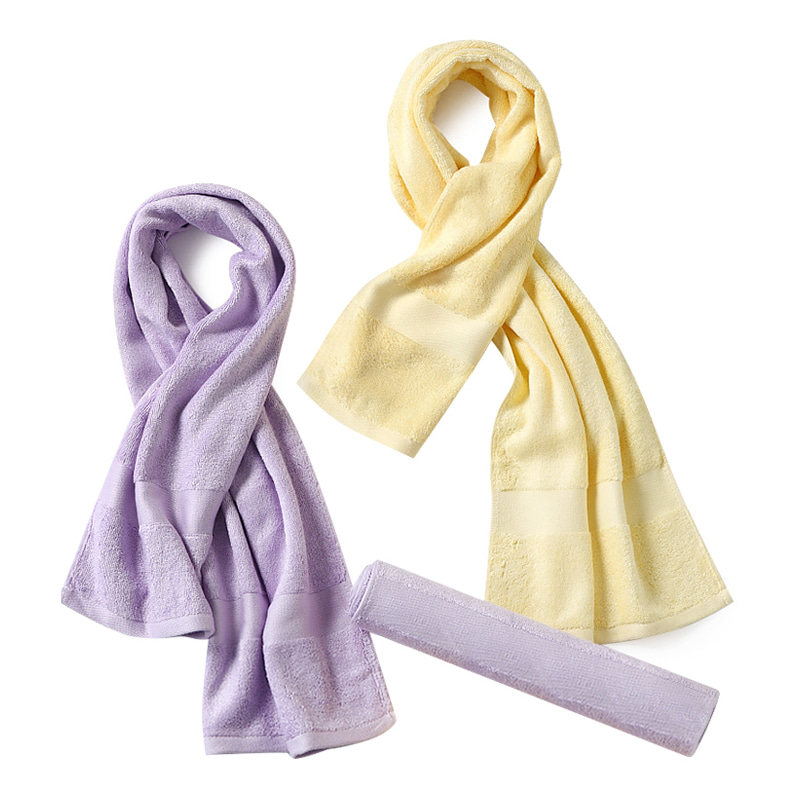
Not every cooling towel is built the same way. Solid color towels are the most affordable option for everyday errands, while printed and dual-color versions are popular for gyms, running clubs, and outdoor crews that want a logo or design visible during use. Below is a small selection of common styles.
Cooling Towel Product Range
A quick look at common cooling towel constructions, from sublimation-printed designs to solid color and dual-tone finishes suited for gyms, hiking, and outdoor labor.
Cooling Towel Compared With Other Towel Types
A cooling towel is often confused with a regular sports towel or even a magic towel, but the material and purpose are different. The table below lines up a cooling towel against several other towel types so it is easier to pick the right one for the job.
| Towel Type | Primary Use | Cools On Contact |
| Cooling towel | Instant relief during exercise or heat exposure | Yes, through evaporation |
| Sports towel | Wiping sweat during training or matches | No |
| Yoga towel | Grip and sweat control on a mat | No |
| Beach towel | Drying off and lounging outdoors | No |
| Bath towel | Everyday drying after washing | No |
| Face towel | Light facial cleansing and drying | No |
| Hand towel | Quick hand drying in kitchens or bathrooms | No |
| Magic towel | Compact, expandable towel for travel | No |
Some households also keep a kitchen towel on hand for spills and a blanket nearby for cooler evenings after a hot day outside, but neither is built with the hydrophilic fiber that gives a cooling towel its signature chill.
Care Tips That Keep The Cooling Effect Working
- Rinse the towel in clean water after each use to remove sweat, sunscreen, or dirt that can clog the fibers.
- Hand wash with a mild detergent instead of harsh soap, which can coat the fibers and slow moisture absorption.
- Air dry flat or on a hanger rather than using high heat, since excessive heat can stiffen the fabric over time.
- Store it slightly damp in a resealable bag if it will be reused within the same day, so it stays ready to snap and go.
- Avoid fabric softener, which leaves a residue that reduces how well the towel absorbs water on future uses.
Mistakes That Reduce Cooling Performance
| Mistake | Why It Hurts Performance |
| Skipping the wring step | A sopping towel drips instead of evaporating evenly, wasting the cooling effect |
| Using hot or warm water to soak it | Warm water starts the towel at a higher temperature, delaying the cooling sensation |
| Leaving it folded in a bag between uses | Trapped moisture without airflow can lead to a musty smell over time |
| Machine drying on high heat | High heat can damage the fiber structure that holds water for evaporative cooling |
Frequently Asked Questions
Can I use a cooling towel without water?
No. The cooling effect comes entirely from water evaporating out of the fabric, so a dry cooling towel behaves like any ordinary towel with no chilling sensation.
Does a cooling towel work in humid weather?
Yes, but the effect is milder and shorter, since evaporation slows down when the surrounding air already holds a lot of moisture. Re-wetting more often helps offset this.
What size cooling towel should I choose?
Common sizes run roughly 8 by 43 inches, 12 by 39 inches, and 16 by 43 inches. Smaller sizes suit wrists and the forehead, while longer sizes wrap comfortably around the neck and shoulders.
Can a cooling towel be printed with a custom logo?
Yes. Sublimation printing and offset printing are both common methods for adding logos or designs to a cooling towel without affecting its evaporative cooling properties.
LATEST POST
Let’s create something amazing together
contact usFeatured Products

-
Phone
+86-0513-84186888/84523388
+86 180 1522 2999
-
Email
admin@bulanren.cn
-
Address
No. 128-8 Taihangshan Road, Rudong Economic Development Zone, Juegang Town, Nantong City, Jiangsu Province, China
- Media


