


 中文简体
中文简体 Español
 日本語
日本語 0
0
How Do Cooling Towels Work?
Content
- 1 The Science Behind the Cooling Sensation
- 2 What Makes the Fabric Different from a Regular Towel
- 3 How to Activate and Reuse a Cooling Towel
- 4 Cooling Towel Product Range
- 5 Cooling Towel Compared to Other Towel Types
- 6 Where a Cooling Towel Makes the Biggest Difference
- 7 Getting the Longest Cooling Effect
- 8 Choosing the Right Cooling Towel
A cooling towel works through evaporative cooling: once soaked in water and snapped out, its hydrophilic fibers hold moisture close to the fabric surface, and as that water evaporates it pulls heat away from the skin. The result is a towel that can feel noticeably cooler than the surrounding air for anywhere from 30 minutes to several hours, and the effect can be renewed simply by re-wetting the fabric.
The Science Behind the Cooling Sensation
The core mechanism is the same one your own body relies on when you sweat, just amplified by engineered fabric. Water absorbed into the towel sits on a fiber structure with a large surface area, so it evaporates quickly. Evaporation is an endothermic process, meaning it requires energy, and that energy is drawn as heat from whatever the towel is touching, usually the skin at your neck, wrists, or forehead. This is why a cooling towel around the neck can feel dramatically more comfortable than a dry towel or plain cotton cloth during a hot workout.
Airflow speeds up the process. In a breezy or air-conditioned environment, evaporation happens faster, so the towel cools more intensely but also dries out sooner. In still, humid air, evaporation slows down, which is why cooling towels feel less effective on muggy days than on dry ones.
What Makes the Fabric Different from a Regular Towel
A standard bath towel or face towel is built for absorbency and softness against skin after a shower. A cooling towel is built for the opposite job: it needs to release water quickly rather than hold it. Most high-performance cooling towels use a blend of nylon and water-soluble polyester fiber, woven into a thin, lightweight fabric around 155gsm. That is far lighter than a typical bath towel, which usually sits between 400 and 600gsm, because bulk and thickness would trap moisture instead of letting it evaporate.
Edges are usually finished with a fine lock-stitch to prevent fraying after repeated wetting and wringing, and quality fabric is treated so colors do not smudge or fade when the towel is washed. The thin, quick-drying construction is also what makes these towels easy to fold small and carry in a gym bag or backpack.
How to Activate and Reuse a Cooling Towel
Soak the towel
Submerge it fully in cool tap water for 15 to 30 seconds so the fibers absorb as much moisture as possible.
Wring out excess water
Twist gently until the towel is damp but not dripping. Too much water slows the evaporative effect.
Snap or shake it out
A few sharp snaps open up the fibers and trigger the immediate cold sensation against your palm.
Re-wet as needed
Once the towel feels dry to the touch, repeat the process. Most towels can be reactivated dozens of times per session.
Cooling Towel Product Range
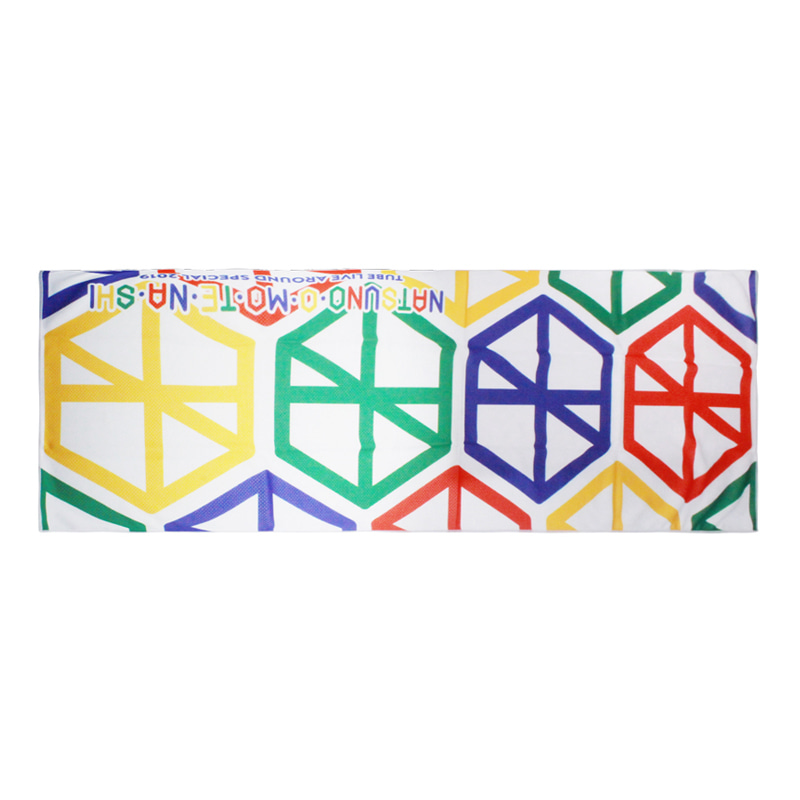
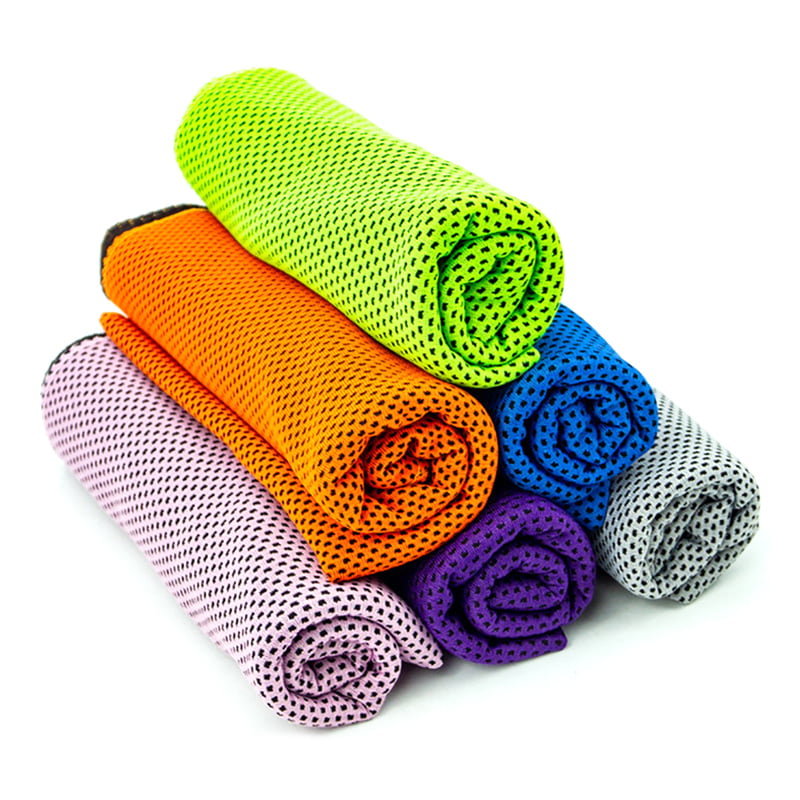
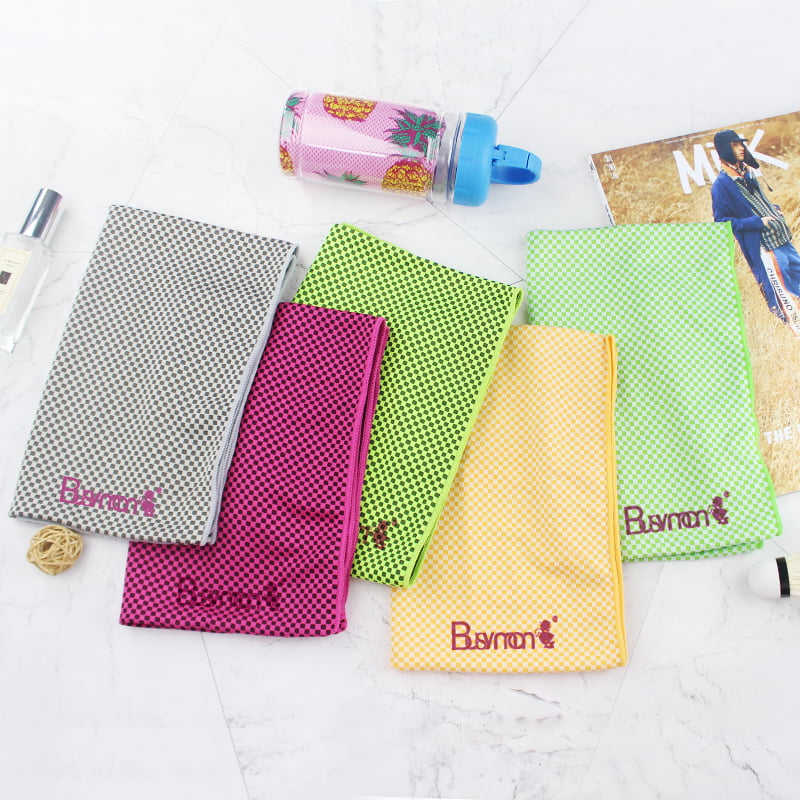
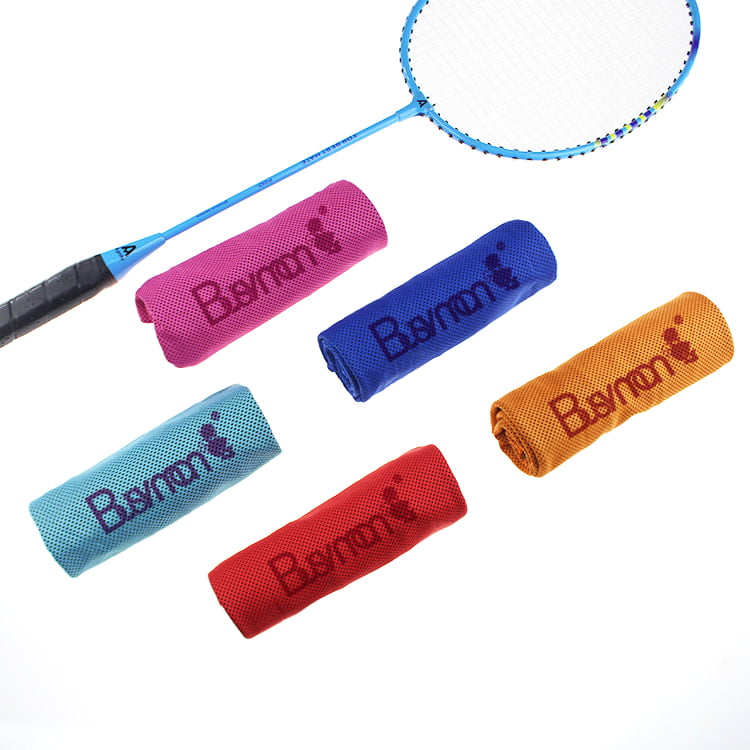
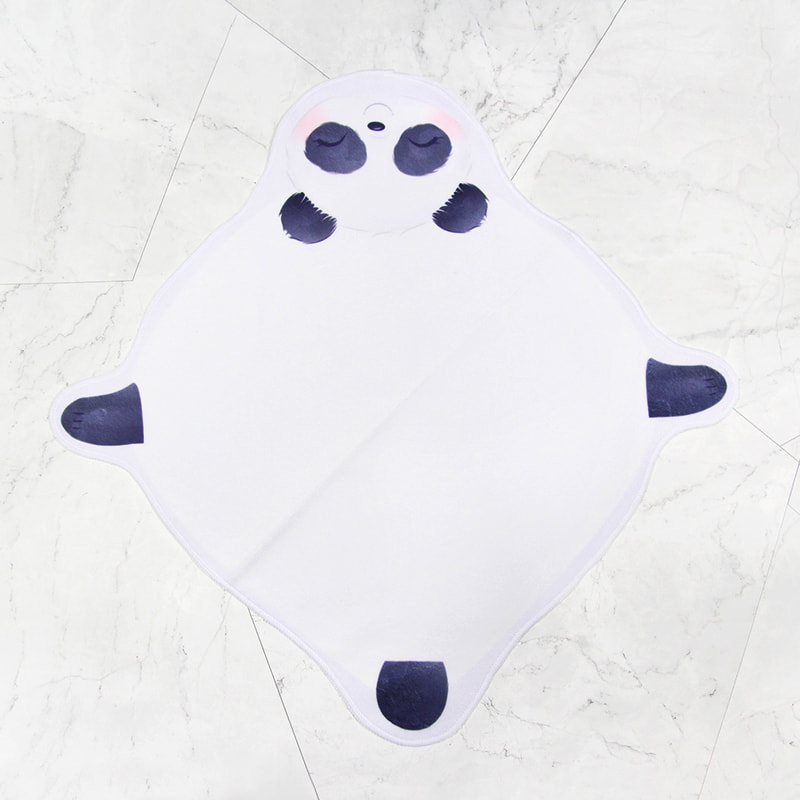
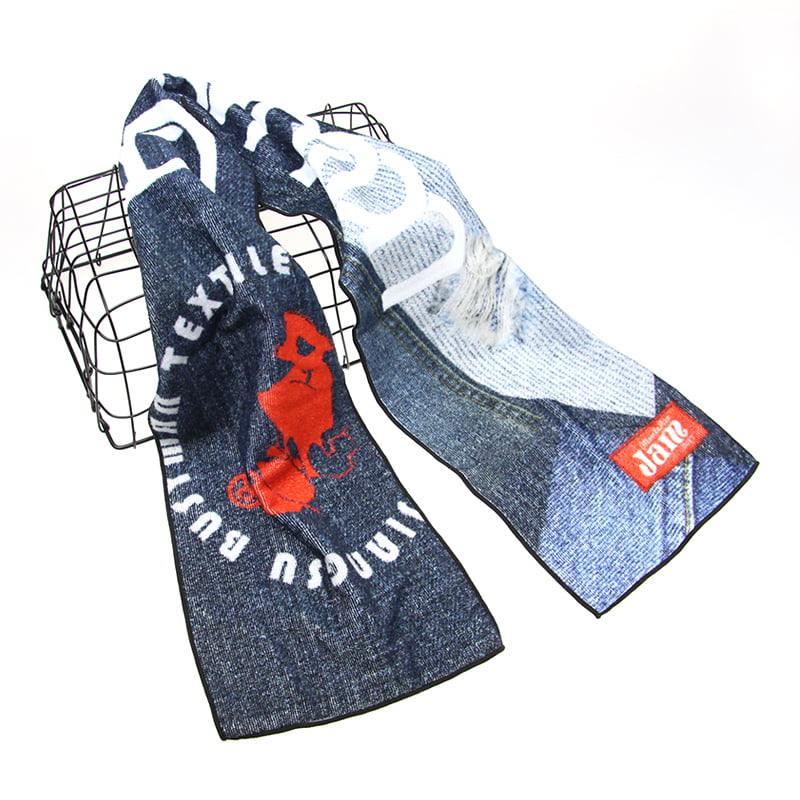
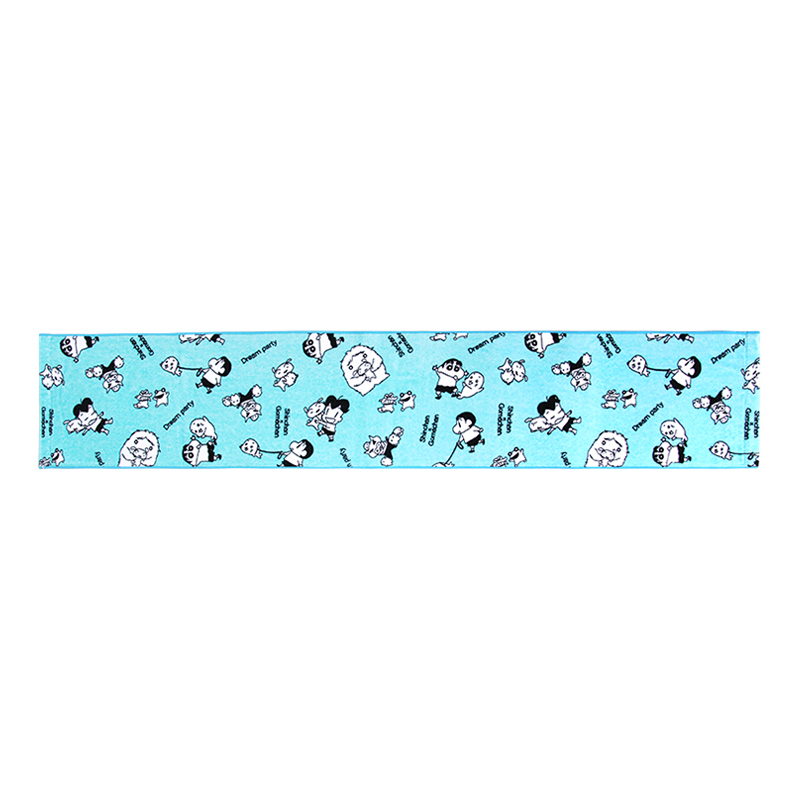
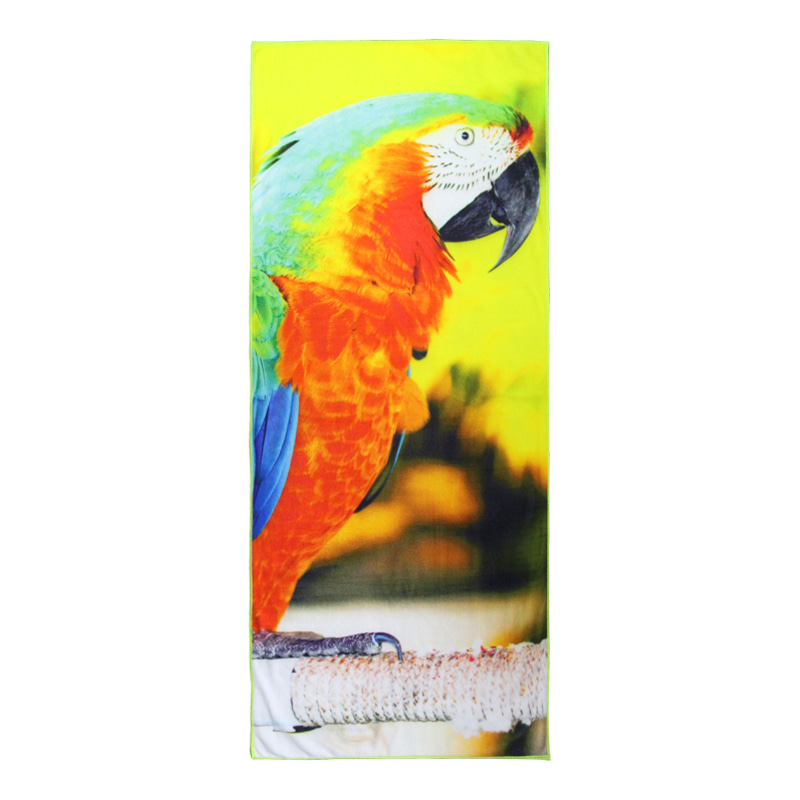
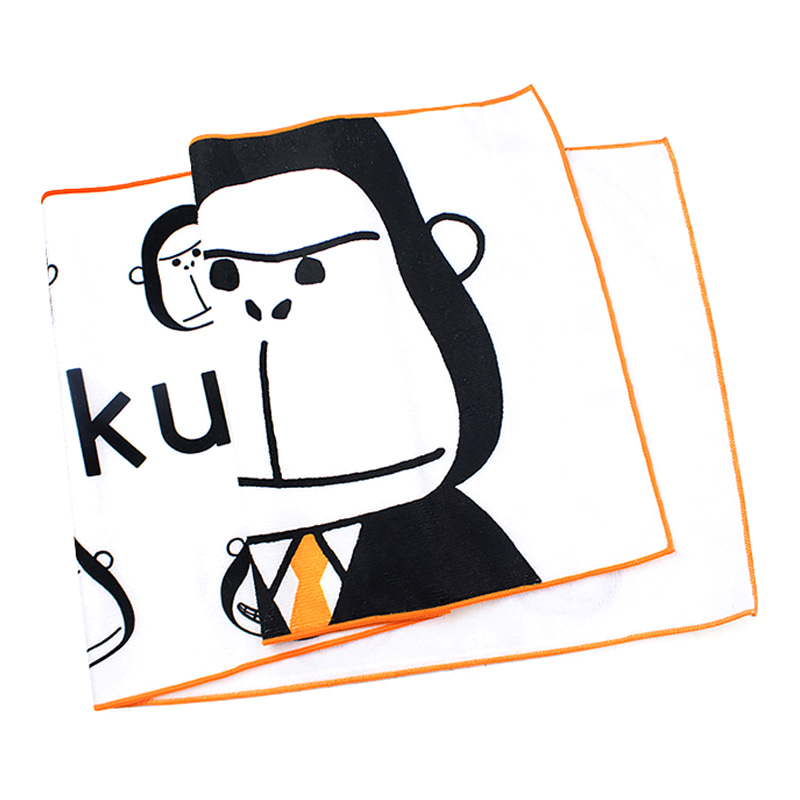
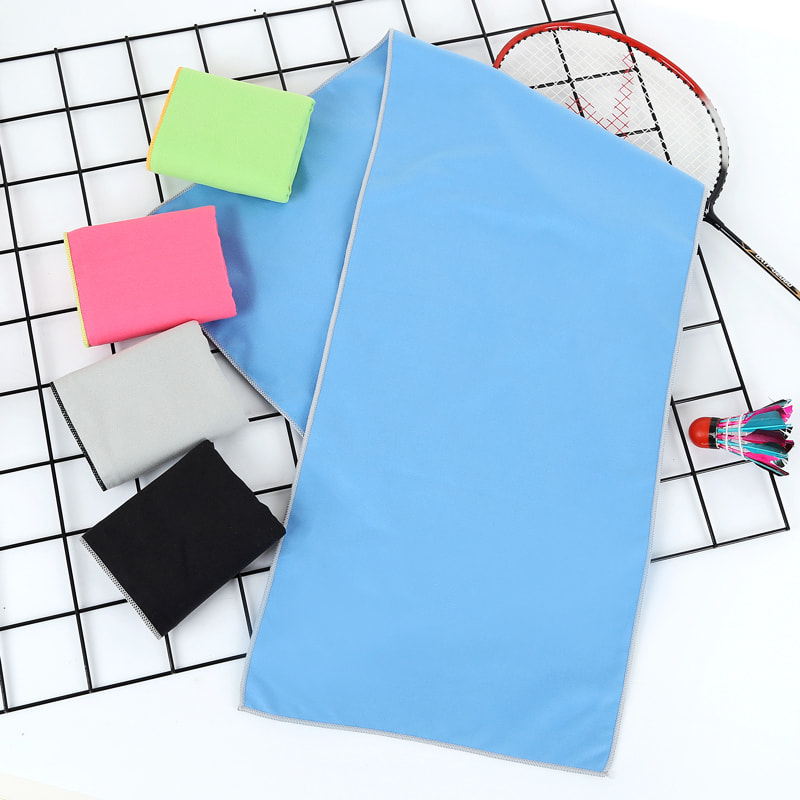
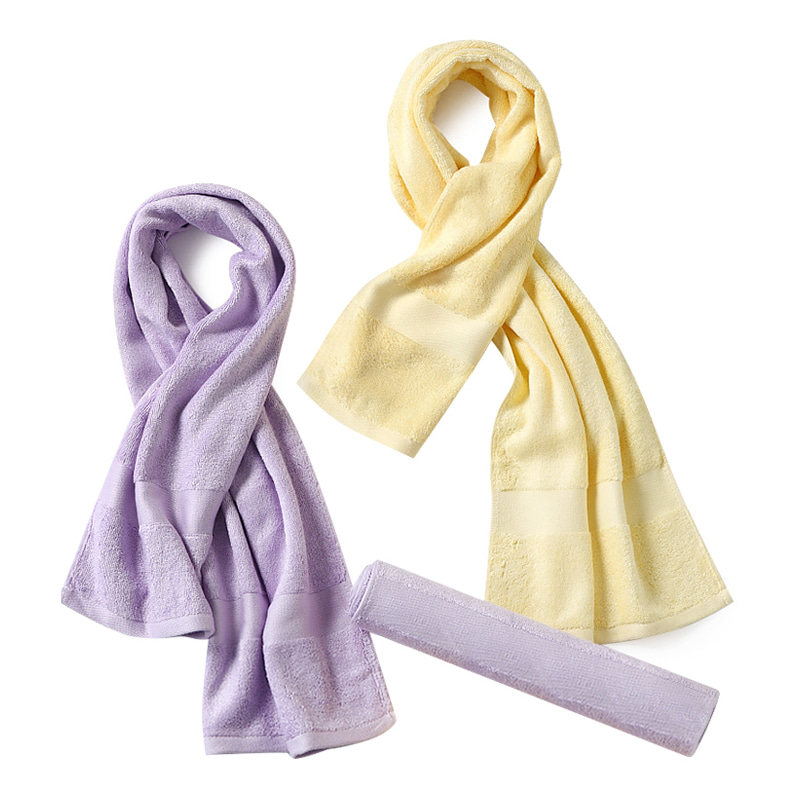
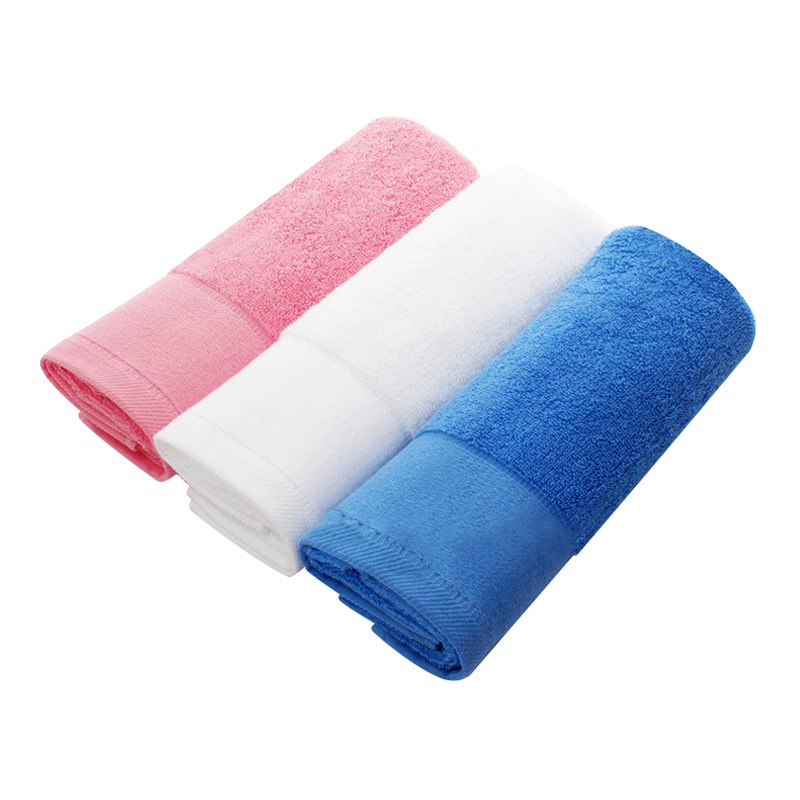
A look at how cold-feel fabric is engineered across different finishes, from sublimation printed designs to plain solid colors, all built on the same 155gsm quick-dry base.
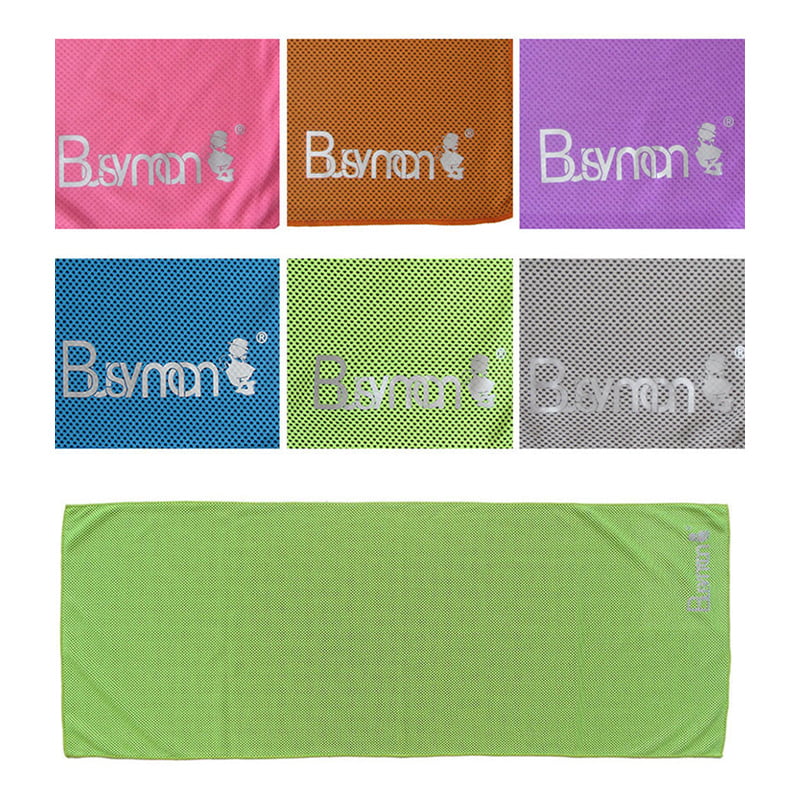
Cooling Towel Compared to Other Towel Types
Not every towel in a gym bag or linen closet is built to do the same job. The table below shows where a cooling towel fits next to a sports towel, beach towel, and bath towel.
| Cooling Towel | Instant, renewable cooling via evaporation | Neck, wrists, forehead during heat exposure |
| Sports Towel | Fast sweat absorption during activity | Wiping face and hands mid-workout |
| Beach Towel | Large surface for drying and lounging | Poolside or sand use, general sun protection |
| Bath Towel | Maximum water absorption, plush feel | Post-shower drying at home |
| Face Towel | Gentle, small-scale absorption | Facial cleansing and daily hygiene |
Where a Cooling Towel Makes the Biggest Difference
Outdoor Sports and Running
Runners and cyclists drape a cooling towel around the neck to offset heat buildup during long sessions, extending the point at which fatigue sets in.
Gym and Fitness Training
Between sets, a quick re-wet and snap restores the cold sensation faster than waiting for sweat alone to evaporate off the skin.
Yoga and Studio Practice
Unlike a yoga towel, which is designed mainly to grip a mat and absorb hand and foot sweat, a cooling towel is better used on the neck or shoulders between poses to manage core temperature.
Hiking, Cycling, and Outdoor Work
Because the fabric is thin and lightweight, it folds down small enough to fit in a pocket or pack for long days outdoors, including manual labor in direct sun.
Getting the Longest Cooling Effect
- Use cool or cold water rather than lukewarm water, since a lower starting temperature extends the noticeable cooling window.
- Keep the towel in a sealed bag or container between uses so it does not dry out completely before you need it again.
- Position airflow across the towel, such as facing a fan or riding into wind, to accelerate evaporation and intensify the effect.
- Avoid fabric softener when washing, since it can coat the fibers and reduce how much water they absorb on the next soak.
Choosing the Right Cooling Towel
Size is the first decision. A narrower 20x110cm towel works well wrapped around the neck for running or cycling, while a wider 40x110cm option gives more coverage for draping over the shoulders during outdoor work or fitness training. Finish is the second decision: solid color cold-feel fabric keeps things simple, while sublimation printing allows full-color logos or designs baked directly into the polyester fibers without affecting the cooling performance. For teams, gyms, or events, adding a printed logo is a common way to turn a functional item into a branded giveaway that people actually keep using.
LATEST POST
Let’s create something amazing together
contact usFeatured Products

-
Phone
+86-0513-84186888/84523388
+86 180 1522 2999
-
Email
admin@bulanren.cn
-
Address
No. 128-8 Taihangshan Road, Rudong Economic Development Zone, Juegang Town, Nantong City, Jiangsu Province, China
- Media


