


 中文简体
中文简体 Español
 日本語
日本語 0
0
Sublimation printing vs screen printing — which is better for cooling towels?
Content
- 1 How The Two Printing Methods Actually Work
- 2 Why Cooling Towel Fabric Changes The Equation
- 3 Sublimation vs Screen Printing: Side-By-Side
- 4 What Happens After 30, 50, and 100 Washes
- 5 Cooling Towel Product Range
- 6 Cost and Minimum Order Quantity
- 7 Matching The Print Method To The Towel Type
- 8 A Buying Checklist Before You Order
- 9 Frequently Asked Questions
For cooling towels, sublimation printing is the better choice in almost every case. It bonds dye directly into the polyester fibers of the cold-feel fabric, so the towel keeps its instant-cooling stretch, its breathability, and its full-color artwork wash after wash. Screen printing sits ink on top of the fabric surface, which stiffens the cooling mesh, blocks airflow, and cracks faster once the towel is repeatedly soaked, snapped, and wrung out. Screen printing still has a place for simple one or two color logos on a tight budget, but for photo-realistic, all-over, or gradient designs on a cooling towel, sublimation is the standard the industry has settled on.
How The Two Printing Methods Actually Work
Sublimation printing starts with a design printed onto transfer paper using sublimation ink. Under heat and pressure, that ink turns into a gas and fuses directly into the polyester or polyamide fibers of the towel. There is no layer sitting on top of the material; the color becomes part of the fabric itself. Screen printing works differently: a mesh stencil is created for each color in the design, and thick plastisol or water-based ink is pushed through the mesh onto the surface of the fabric, where it cures and sits as a raised film.
This distinction matters more for a cooling towel than for almost any other textile category, because a cooling towel's entire function depends on how freely water and air can move through the weave.
Why Cooling Towel Fabric Changes The Equation
A typical sublimation-ready cooling towel uses a lightweight 155gsm cold-feel fabric, usually a polyester-polyamide blend, built to soak up water and release it slowly through evaporation. That evaporation is what pulls heat away from the skin. Anything that blocks the fabric's pores reduces that effect.
- Sublimation: the dye penetrates the fiber at a molecular level, so the surface texture, stretch, and pore structure of the fabric stay untouched.
- Screen printing: the ink film sits on the surface, adding a layer that can stiffen the fabric in the printed area and reduce the snap-and-stretch motion used to activate the cooling effect.
- Repeated wetting: cooling towels are soaked, wrung, and re-wet constantly, which is exactly the kind of repeated flexing that causes surface ink to crack or peel over time.
Sublimation vs Screen Printing: Side-By-Side
| Print depth | Dye embedded inside the fiber, zero added thickness | Ink layer sits on top of the fabric surface |
| Color range | Unlimited colors, gradients, and photo-realistic images | Best for 1 to 6 flat spot colors |
| Feel after printing | Soft, unchanged, breathable | Slightly stiffer where ink is applied |
| Fade resistance | High, color will not peel or crack with washing | Moderate, ink can crack or fade after repeated washing |
| Cooling performance | Fully preserved, no blocked pores | Can be reduced in heavily printed areas |
| Best fabric match | Polyester and polyamide blends | Cotton, cotton-poly blends |
| Minimum order quantity | Typically low, no plate-making required | Higher, since each color needs a separate screen |
| Setup cost per design | Low, digital file goes straight to production | Higher, screens must be made and reused per color |
What Happens After 30, 50, and 100 Washes
The real difference between the two methods shows up over time rather than on day one. Because sublimation ink and fabric are fused into a single layer, there is nothing on the surface left to peel. Manufacturers commonly report no visible fading or smudging even after dozens of wash cycles, and the print holds its vibrancy under sunlight exposure as well, since the color is not sitting exposed on the surface the way surface ink is.
Screen-printed graphics, in contrast, rely on the ink layer staying bonded to the surface. Every wash cycle flexes that layer, and constant wetting and wringing accelerates micro-cracking at the edges of the design first. On a towel that is folded, twisted, and stretched daily, this shows up faster than on a screen-printed t-shirt that is washed once a week.
Cooling Towel Product Range
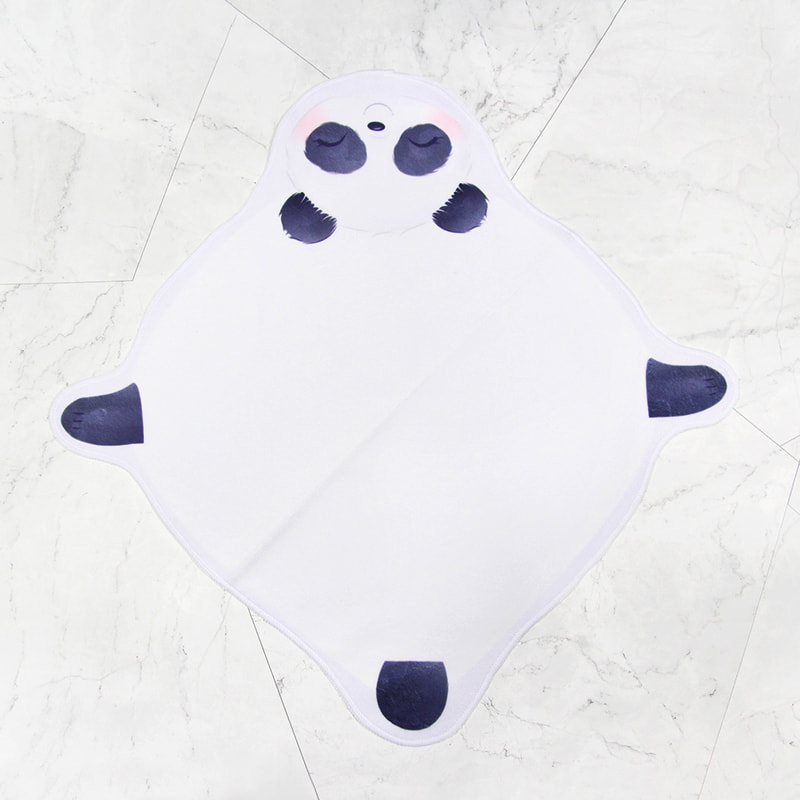
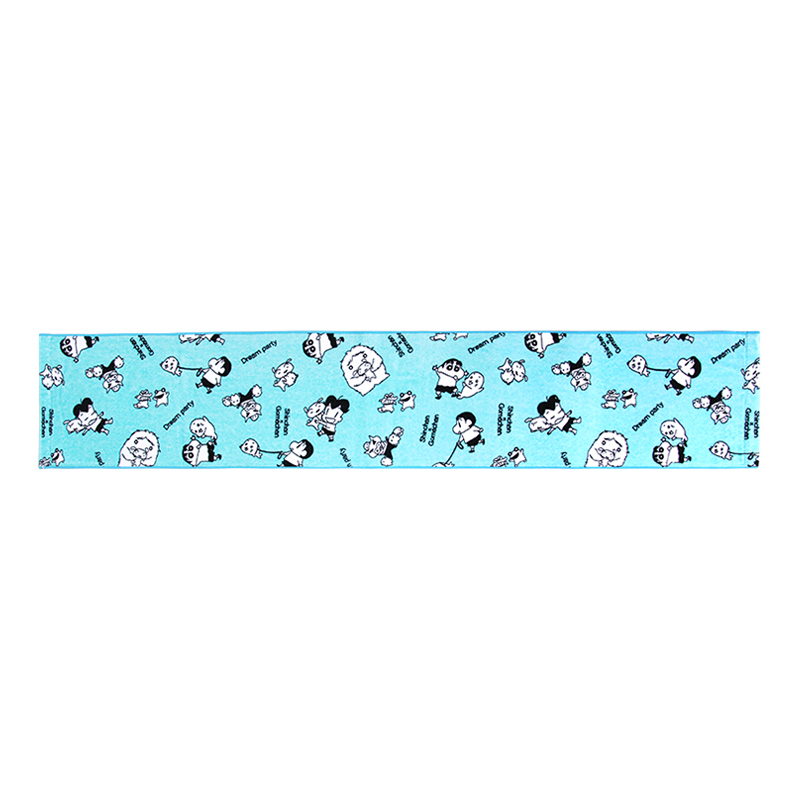
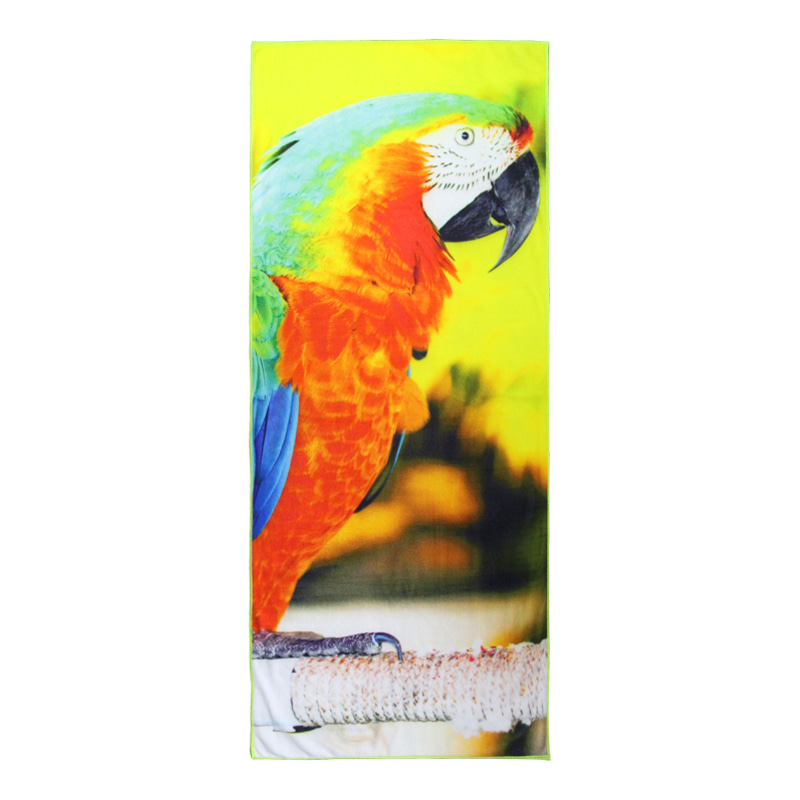
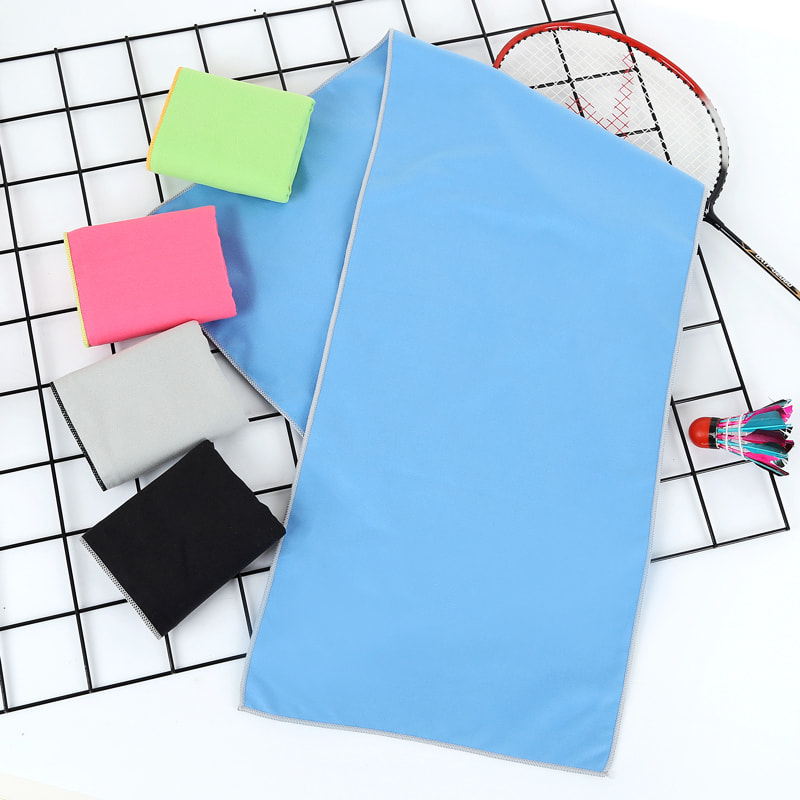
Sublimation is not limited to one towel shape or size. The same fiber-level printing process is applied across an entire family of cold-feel and companion products, so a single artwork file can be scaled across a full merchandise line.
Sublimation-Ready Towel Collection
A look at how the same printing technology carries across different towel formats, from gym accessories to beach essentials.
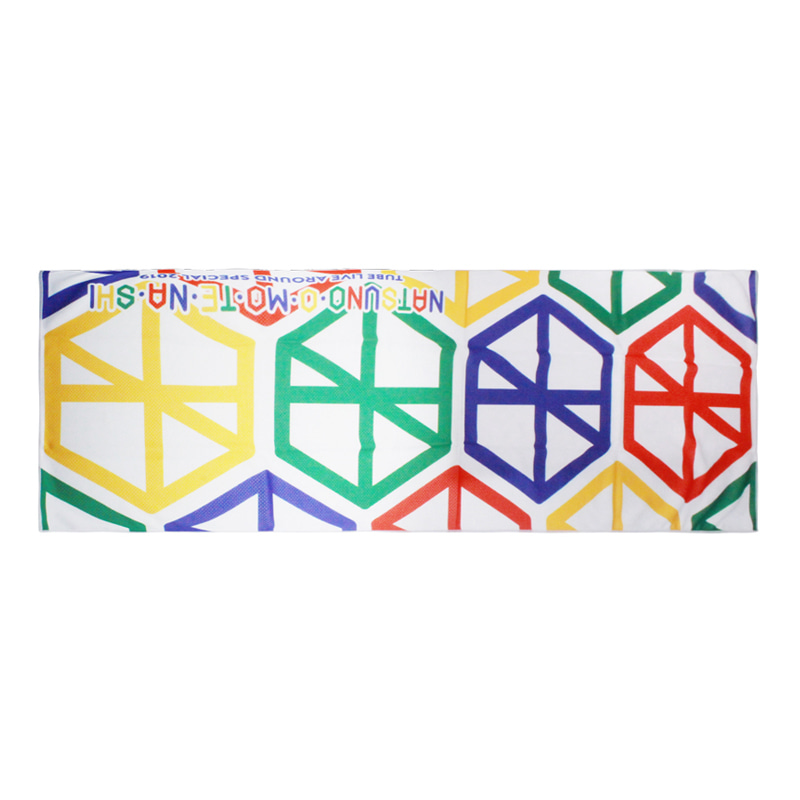
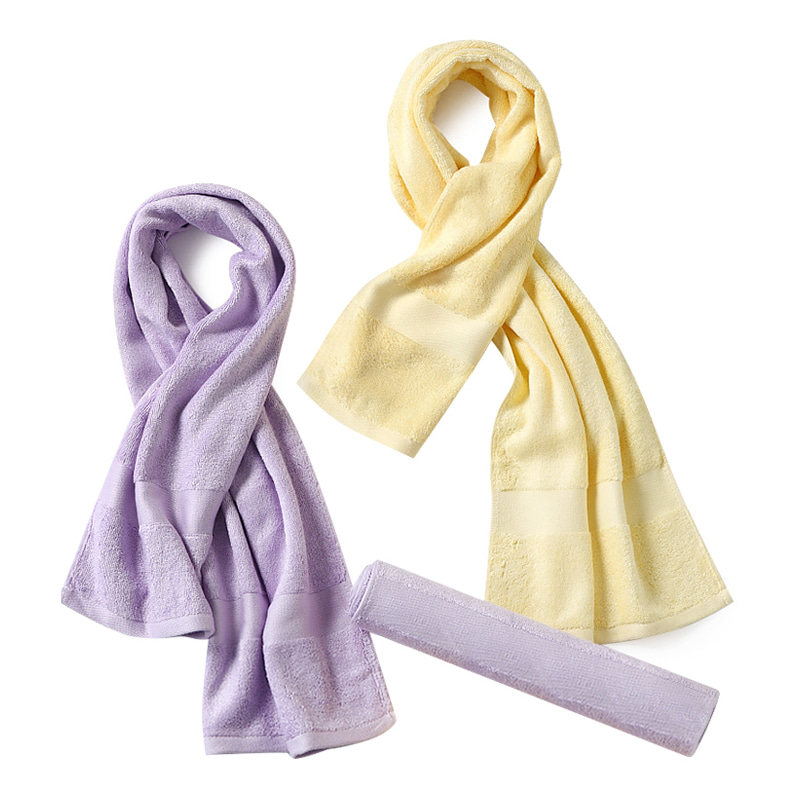
Sublimation Cooling Towel
Cooling Towel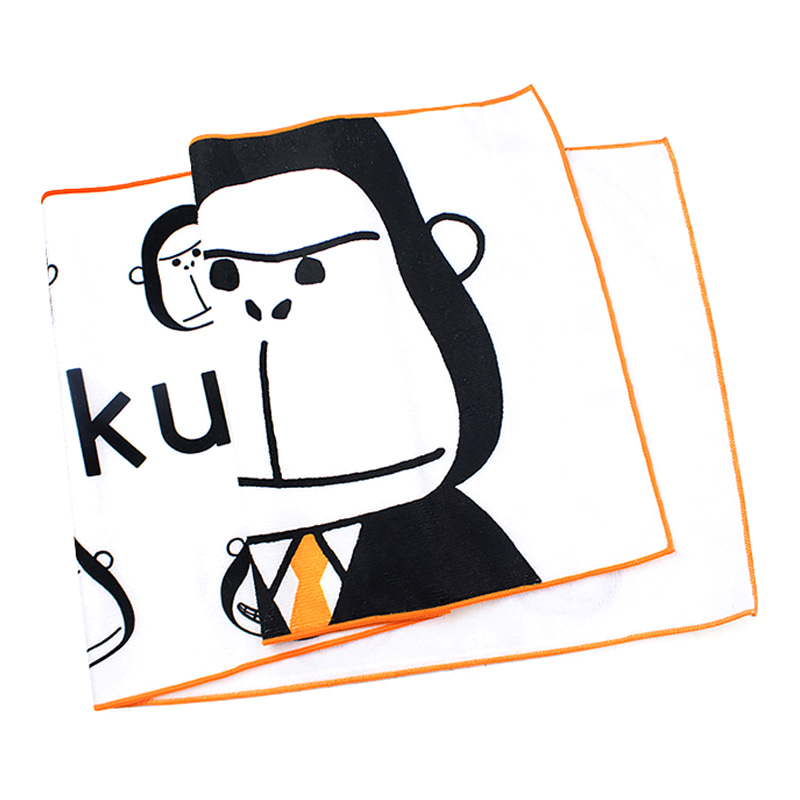
Sublimation Sports Towel
Sports Towel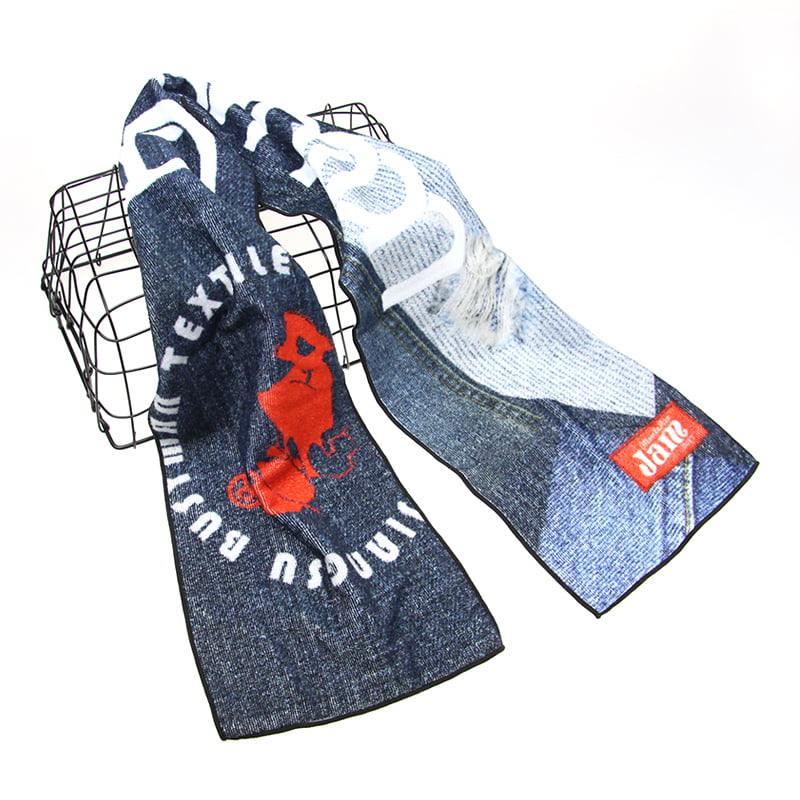
Digital Printed Sports Towel
Sports Towel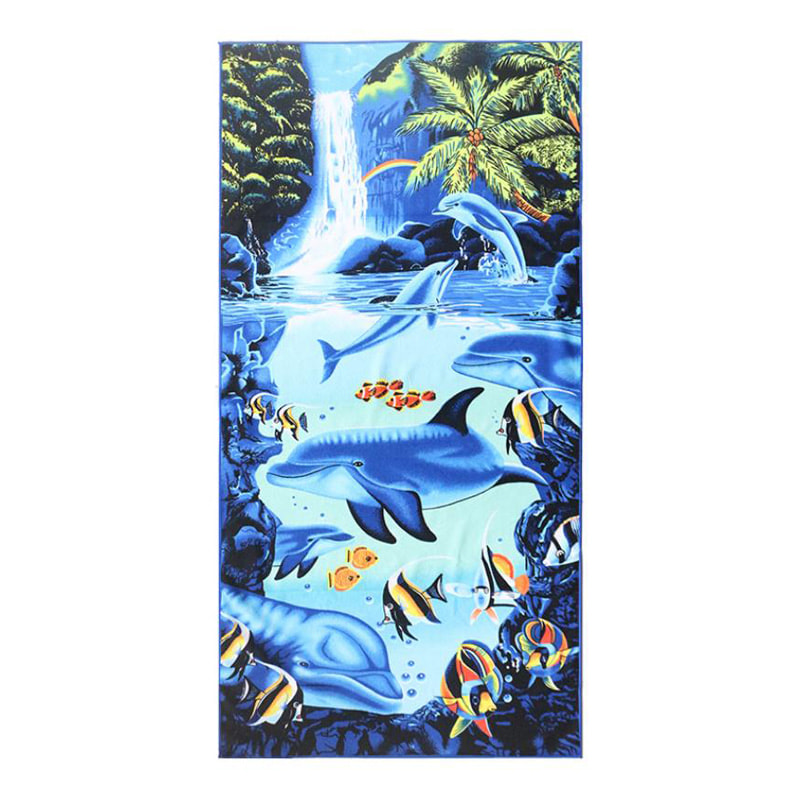
Microfiber Beach Towel
Beach Towel
Quick-Dry Gym Towel
Sports TowelCost and Minimum Order Quantity
Screen printing carries a fixed setup cost for every color in the design, since each color needs its own physical screen. That cost is spread across the order, so it only becomes efficient at higher volumes with simple, low-color artwork. Sublimation skips the plate-making step entirely; the design file goes straight from screen to production, which is why factories can offer low minimum order quantities and fast sampling, often within a few days, even for complex multi-color or photo designs.
For a buyer testing a new design, a small batch of custom cooling towels, or a promotional run tied to an event or sports season, sublimation usually works out cheaper per unit once color complexity goes beyond two or three spot colors.
Matching The Print Method To The Towel Type
Printing choice should follow the fabric and the use case, not the other way around. Here is how the two methods typically map across a wider towel and textile range.
- Cooling towel: sublimation is the default; the polyester cold-feel fabric is built for it and the cooling function depends on an untouched fiber surface.
- Sports towel: sublimation suits microfiber and polyester sports towels with team logos or all-over patterns, while screen printing still works for simple cotton sports towels with a single logo.
- Beach towel: sublimation handles large, photo-style beach scenes and gradients well on polyester-blend beach towels; cotton beach towels often use digital cotton printing instead.
- Yoga towel: sublimation keeps the grip texture and moisture-wicking surface intact, which matters more on a yoga towel than almost any other product.
- Magic towel: the compressed, unfolding magic towel format relies on sublimation because the fabric must expand and absorb water without a surface coating interfering.
- Bath towel and hand towel: cotton versions favor digital cotton printing or embroidery, while microfiber bath and hand towels use sublimation for vivid, fade-resistant patterns.
- Face towel: screen printing can work for a small single-color logo in a corner, but sublimation is preferred for full-face patterned designs.
A Buying Checklist Before You Order
Whether sourcing a single cooling towel design or a full seasonal range, a few questions before placing an OEM or ODM order help avoid a mismatch between fabric and printing method.
- Confirm the fabric composition first. Sublimation needs a high polyester or polyamide content to bond properly; it will not print well on 100 percent cotton.
- Ask for a physical sample rather than a digital proof, since color rendering on screen rarely matches the final dye-sublimated result exactly.
- Check the fabric weight in GSM. Lighter cold-feel fabrics around 150 to 170gsm are standard for cooling towels and support both fast wetting and fast drying.
- Request wash-test data or samples if the towel will be reordered regularly, so fade behavior is known before a large production run.
- Clarify minimum order quantity and sampling lead time upfront, since these vary between sublimation and screen-printed production lines.
Frequently Asked Questions
Does sublimation printing weaken the cooling effect of the towel?
No. Because the dye becomes part of the fiber rather than sitting on top of it, the fabric's pores stay open and water absorption is not affected.
Can screen printing be used on a cooling towel at all?
It can, but usually only for a small logo area on a cotton-blend cooling towel, since large or full-color screen printed designs add stiffness and reduce flexibility.
Which method is more eco-friendly?
Sublimation typically uses water-based inks and produces less waste than solvent-heavy screen printing processes, making it the more resource-efficient option for large production runs.
Is sublimation more expensive than screen printing?
Not usually. Screen printing has fixed per-color setup costs, while sublimation skips plate-making, so sublimation is often cheaper for detailed or multi-color designs, especially at lower volumes.
LATEST POST
Let’s create something amazing together
contact usFeatured Products




-
Phone
+86-0513-84186888/84523388
+86 180 1522 2999
-
Email
admin@bulanren.cn
-
Address
No. 128-8 Taihangshan Road, Rudong Economic Development Zone, Juegang Town, Nantong City, Jiangsu Province, China
- Media


